Giỏ hàng đang trống!


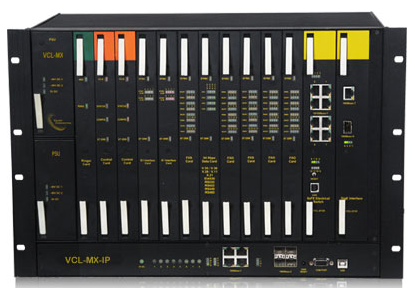
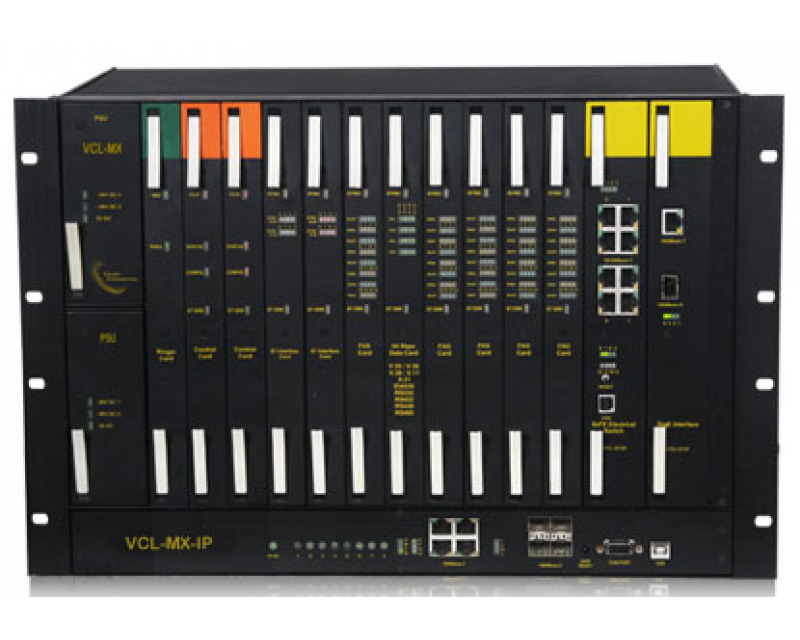
VCL-STM-1/4, VCL100 STM-1/4 (upto 252 E1)
0 VNĐ
Trước Thuế: 0 VNĐ
Trước Thuế: 0 VNĐ
Mã sản phẩm: VCL100 STM-1/4
Tình trạng: Còn hàng
Tình trạng: Còn hàng

Số lượng:
+
-
Description
The VCL100 STM-1/4 (upgradable to STM-16) is a modular, and cost effective STM-1/4 SDH multiplexer equipment designed to manage bandwidth and voice & data access services over STM networks. The products are designed to support end-to-end provisioning and management of services across all segments of the optical network. It combines innovative optical networking software with the intelligence of SONET/SDH to deliver a flexible, cost-effective network solution.
The VCL100 STM-1/4 (upgradable to STM-16) provides flexibility to the customers in terms of expansion to support additional client interfaces by adding new modules in the field. It is also a scalable system that enables the customer to start with an STM-1 network and upgrade to STM-4 as the traffic demand increases.
VCL100ME supports the following interfaces:
- STM-1 (155.52 Mbps)
- STM-4 (622 Mbps) interfaces
- E1 / DS1
- E3 / DS3 Electrical
- E1 / T1 Interface cards
- 10/100BaseT Ethernet
- It can be configured in various topologies such as linear, ring or mesh.
The distinguishing features of VCL100 STM-1/4 (upgradable to STM-16) over competing products are its unprecedented port density, scalability, redundancy and upgrade-ability with its software intelligence. The VCL100 STM-1/4 family of products can be managed through an integrated NMS that manages all STM equipment, providing customers with end-to-end provisioning from a single platform for multiple service types – from E1s, E3s, STM-1, STM-4, and 10/100Mbps Ethernet services.
The STM-1 / STM-4 (upgradable to STM-16) can be managed through an integrated NMS that manages all the equipment, providing customers with end-to-end provisioning from a single platform for multiple service types - from E1/DS1s, E3/DS3s, E4/STM-1e, STM-1o and 10/100Mbps Ethernet services.
Features
- Next generation access SDH multiplexers to provide multi-service solutions at the edge.
- Supports for both TDM and data traffic services.
- Flexible set of configurations to meet customer’s different service requirements.
- Bring the power of Intelligent Optical Networking from optical core to access.
- Supports MSP and SNCP protection.
- STM-1 and STM-4 Multiplexers come with:
- Add/Drop and Terminal Multiplexer, Cross-Connect and Regenerator configurations
- E1, E3, E4, STM-1e (electrical), STM-1 (optical) and 10/100 Mbps ethernet tributaries
- Support for AU-3 and AU-4 mapping
- Rate adaptive ethernet services for easy control of bandwidth with 2 Mbps granularity.
- Supports MSP and SNCP protection.
- Optional hardware redundancy.
Network Applications
STM-4 Rings
VCL100 STM-1/4 is fully compatible with other member of the VCL100 STM-1/ STM-4 family. It can therefore be seamlessly used in an end-to-end network configuration from the customer premises to the optical core.
The following figure shows a STM-4 network built using VCL100 STM-1/STM-4 with low drop requirements at a couple of locations. These requirements can be cost-effectively addressed by using a VCL100 STM-1/4.

STM-1/4 Subtended Rings
The STM-1 tributary modules of VCL100 STM-1/4 can act as SDH NEs completing the Subtended Rings, or LTE performing Line, Span or Ring Switching as well as pass DCC. The modules are able to insert/drop traffic through the switching matrix to any of the other tributary/aggregate cards. It is possible to connect a mix of STM-1/4 rings through the VCL100 (STM-1 / STM-4).

Transparent LAN service
The VCL100 STM-1/4 ETC card is transparent to all higher layer protocols and provides point-topoint connections between remote Ethernet segments. The ETC is well suited for LAN interconnection services among geographically dispersed corporate offices. Typical LAN interconnection solutions use expensive ATM interfaces on routers to connect to SDH multiplexers. But the 10/100 Base-T interfaces on the VCL100 STM-1/4 SDH node provide a much more cost-effective solution.
Conventional Solution using ATM interfaces on Routers
Consider connecting 8 subscribers requesting bandwidth of 6 Mbps each. Each router need 8 E3 interfaces for transporting this traffic and this necessitates an STM-4 Backbone.

VCL100 STM-1/4 ETC Solution
In the VCL100 STM-1/4 based solution the traffic from each of these Ethernet connections can be collected using a 10/100Base-T interface on the routers and SDH nodes. The VCL100 STM-1/4 SDH node requires an 8x10/100Base-T ETC card and the traffic from these 8 different connections is flexibly mapped, requiring only an STM-1 Backbone. In addition, upgrading from the existing bandwidth is software-selectable resulting in cost savings in terms of interface cards and operational expenses.

Integrated Voice and Data Network
In a typical Interconnect Service voice and data traffic from multiple corporate offices need to be interconnected in a cost effective manner. A conventional solution uses separate voice and data networks to carry this traffic over separate fibers. Using the VCL100 STM-1/4, which provides both TDM and Ethernet interfaces through the ETC, a service provider can carry both voice and data over the same fiber pair using the same equipment.
Example: There is a need to provide data connectivity of 10 Mbps between two locations. There is also a voice traffic requirement of 21E1s between the same two locations. Consider two different distances between the two locations: 10 km and 50km.
Conventional Ethernet + SDH solution
In this scenario, data and voice are carried over different fiber pairs using Gigabit Ethernet (GigE) for data and conventional SDH for voice (Figure 1). GigE LX/HX solution can drive only up to 10 km. GigE ZX solution can provide 70 km spans but is expensive.

VCL100 STM-1/4 ETC solution
In this solution, data and voice are carried over the same fiber pair by mapping the 10/100Base-T Ethernet traffic onto SDH. The network is a linear STM-4 network, which can be optionally configured for 1+1 protection. Longer distances can be achieved by using long haul lasers that are relatively much more cost-effective.


-800x640.PNG "VCL-STM-1, VCL100MC-1 (upto 63 E1)")




.PNG)